


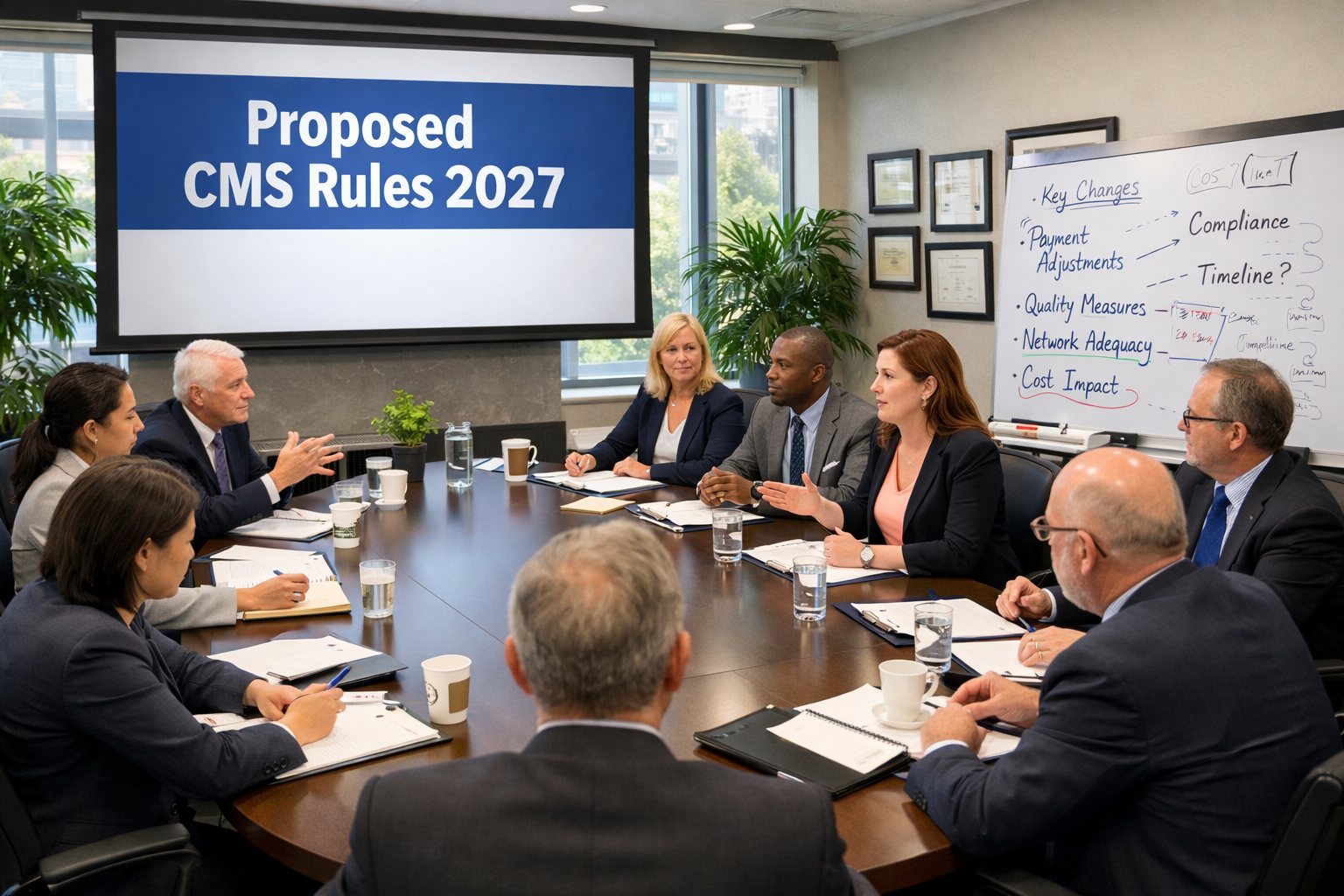
As we look toward the 2027 Annual Enrollment Period (AEP), the Centers for Medicare & Medicaid Services (CMS) has unveiled a proposed rule that promises to shift the landscape for insurance and financial professionals fundamentally. This proposal marks a significant milestone in our mission to advocate for fair regulations that reduce administrative burdens on sales professionals and brokers, enabling them to focus on delivering exceptional service to beneficiaries.
These changes would take effect for the 2027 AEP beginning October 1, 2026, and represent a needed "course correction" after years of tightening restrictions. Professional community members must engage with these developments to ensure that common sense prevails where administrative red tape once hindered our ability to serve clients.
Support for Reducing Barriers to Beneficiary Engagement
One welcome shift in the proposed rule involves the removal of artificial barriers to beneficiary engagement. The "12-hour delay" between educational and marketing events currently creates a logistical nightmare for both advisors and seniors. While the
 |
| Bryan Keeven President of Health Distribution Product AmeriLife |
underlying SOA requirement remains—as it should—removing the waiting period empowers advisors to have immediate, productive conversations with beneficiaries who are ready to move forward. This streamlined approach represents a clear victory for both operational efficiency and superior client service.
Record Retention Revisions Should Go Further
Advocating flexibility does not mean abandoning professional standards. The proposed rule reduces call recording retention from 10 years to 6 years, which is a positive step. However, I recommend further reducing it to four years to better balance administrative costs with meaningful consumer benefits.
While this proposal represents progress, additional reforms are also needed for face-to-face client meetings, where recording requirements create operational burdens and an uncomfortable environment that diminishes the quality of client interactions.
We must remain vigilant about the quality of these records regardless of the timeframe. Audio recordings should remain the gold standard because text transcripts lack the essential context of tone and inflection required to verify compliance truly.
Caution on New Special Enrollment Period (SEP)
Regulatory updates often bring unintended consequences that require careful monitoring and evaluation. CMS has proposed a new Special Enrollment Period (SEP) triggered by provider network terminations. While we support this proposal in principle—as it addresses a legitimate concern when beneficiaries lose access to their healthcare providers—we have significant reservations about its implementation.
CMS's intention is commendable: protecting beneficiaries from being caught in the middle of carrier and provider contract negotiations. However, we believe more analysis is needed to fully understand the operational and regulatory implications of this SEP before implementation.
Key Concerns:
- Verification and administration: The proposal lacks clear guidance on how beneficiaries will prove eligibility for this SEP. When a member claims their primary care physician, specialist, or preferred pharmacy has left their plan's network, who will verify this information? Without robust verification protocols, the SEP becomes difficult to administer consistently.
- Potential for abuse: Rigorous guardrails are essential to prevent bad actors from exploiting this SEP to inappropriately churn business outside the standard Annual Enrollment Period (AEP) and Open Enrollment Period (OEP).
- Downstream consequences: The full impact of this open-ended SEP has not been thoroughly examined. As the most significant change in the proposed rule, it warrants additional scrutiny before implementation.
Upholding Medicare Marketing Standards
A critical debate regarding marketing language also persists. The industry strongly opposes moves to relax restrictions on superlatives such as "best" or "top-rated,” warning that it could worsen misleading or aggressive marketing practices. Having such language risks exacerbating the very misleading marketing issues we have fought so hard to curb. Our value proposition relies on our expertise and the trust we build with our clients rather than simple superlatives.
Addressing Bad Actors & TPMO
The need to redefine the "Third-Party Marketing Organization" (TPMO) label represents perhaps the most transformative recommendation. The current definition remains overly broad, lumping independent field agents and FMOs together with lead generators and massive call centers. CMS should delineate these personas clearly:
- Field Agents and Brokers
- Field Marketing Organizations (FMOs)
- Call Centers
- Lead Generators
Distinct categories allow CMS to target enforcement and support better. We also recommend that CMS collaborate with industry stakeholders to build a proactive, data-driven system for identifying and removing "bad actors," modeled on SEC/FINRA processes that include appeals and continuous monitoring. Furthermore, the CMS should implore plan sponsors to establish clear guidelines, definitions, and criteria to distinguish between acceptable and unacceptable practices.
This oversight is vital because bad agents currently find it too easy to move to another carrier or FMO and continue harmful practices even after a termination.
Advocacy and the Future of Medicare Marketing
This proposed 2027 rule is a "game-changer," but our engagement will determine the outcome. I encourage you to stay informed, participate in advocacy networks, and continue providing the high-quality, ethical advice that defines our industry. We can ensure that these rules provide the flexibility we need while upholding the gold standard of consumer protection our clients deserve.
Bryan Keeven is the President of Health Distribution Product at AmeriLife.